The Movement · Journal
When Heritage Becomes Future: La Fête-Dieu
Metamorphosis needs roots
We live in an age fascinated by speed. Each day brings its share of innovations, ruptures and promises. We celebrate novelty as a value in itself, as though progress meant breaking free of the past. And yet the deepest transformations are never born from nothing. They take root in a memory, a culture, a history. They draw their strength from a heritage they do not reproduce identically, but transform in order to keep alive.
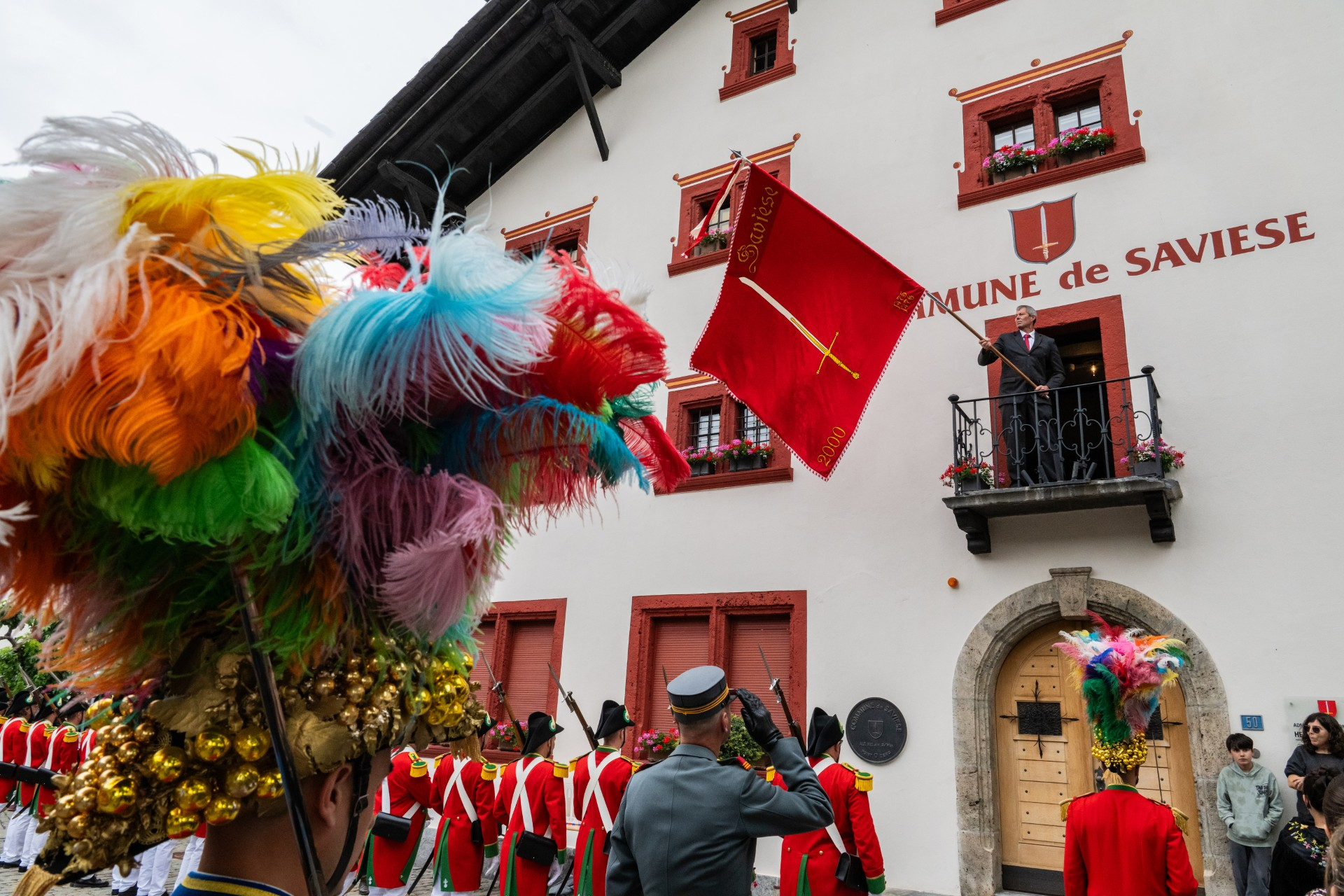
In Savièse, dear to me, I had the privilege of taking part in the Fête-Dieu alongside several generations of my family. From dawn, when the *diane* — the reveille — sounds through the village streets, something timeless is set in motion. The banners are unfurled, the symbols are passed from hand to hand, the children join the procession, the musicians take their places, and an entire community gathers around a ritual that has been carried on for centuries.
Seen from the outside, one might see only folklore: a succession of costumes, processions and traditions. But whoever takes the time to look discovers something else — a society in dialogue with itself across time.
The Fête-Dieu of Savièse is remarkable because it illustrates an essential truth: a tradition survives only when it agrees to transform. If it freezes, it becomes a museum. If it breaks with its origins, it loses its meaning. Its secret lies in that subtle balance between fidelity and renewal. That is precisely what explains its endurance. Over the decades, it has known how to absorb the changes of society while keeping its unique character.
This experience reminded me how much our age needs to rehabilitate the idea of heritage.
We inherit a cultural patrimony — know-how, beliefs, institutions, and also the collective stories that give our existence meaning. This heritage is not entrusted to us to be kept under glass. It is handed down to us to be carried further.
Heritage is not a point of arrival; it is a point of departure.
The philosopher Hans-Georg Gadamer reminded us that all understanding is born of a conversation with tradition. We never build from nothing. We always move forward from what precedes us. True freedom, then, is not to deny our roots, but to understand them well enough to be able to go beyond them.
That is exactly what I felt during this Fête-Dieu.
The children of the *tsanbrides* walk beside the elders. Religious symbols stand alongside social and communal ones. The ceremony brings together fervent believers, those attached to their roots, and ordinary residents glad to share a collective moment. This coexistence is not a weakness; it is the proof of the tradition's vitality. A living tradition is one that lets each person recognise themselves in it while bringing their own interpretation.
This reflection echoes the vision we carry at the FEM.
To create ground for excellence. Excellence does not consist in erasing what came before us. It consists in building on the best achievements of the past to reach a higher level. The grenadiers, the musicians, the banner-bearers, the organisers carry on gestures handed down across generations. Each receives a responsibility to honour and, in turn, to pass on. Excellence is first of all an act of continuity.
To create ground for expression. A tradition lives only because women and men give it a new voice. Each generation reinterprets the symbols it receives. It projects into them its questions, its aspirations and its dreams. It is not repetition that gives a culture life, but its capacity to remain relevant in a changing world.
To create ground for exception. The exceptional arises when heritage, excellence and creativity meet. It appears when the past ceases to be a burden and becomes a source of inspiration — when memory nourishes the future instead of hindering it.
In the end, the Fête-Dieu of Savièse teaches us a universal lesson.
We often tend to oppose tradition and innovation, heritage and progress, roots and future. This is a mistake. The societies that endure are not those that choose between these dimensions. They are the ones that know how to reconcile them.
As the philosophy of the FEM puts it:
Technology extends the possible. The hand gives form. Art gives a soul. The FEM brings them together. Emotion does the rest.
Technology represents our capacity to invent the future. The hand embodies the transmission of know-how. Art expresses the spiritual and human dimension that gives our creations meaning. Together, they illustrate the very dynamic of any authentic metamorphosis.
This Fête-Dieu reminded us, magnificently, that the future is not built against our roots.
It is built from them.
For true metamorphosis does not consist in becoming someone else.
It consists in becoming fully oneself — honouring what has been handed down to us, while having the courage to transcend it.