Metamorphin

The Alarms · Cries

Twelve works. Twelve warnings. Twelve questions.

Each Cry is a work of art. Each work is a manifesto. Each manifesto is an invitation to think.

Cry #1 · Campus Santé la Tour, Geneva

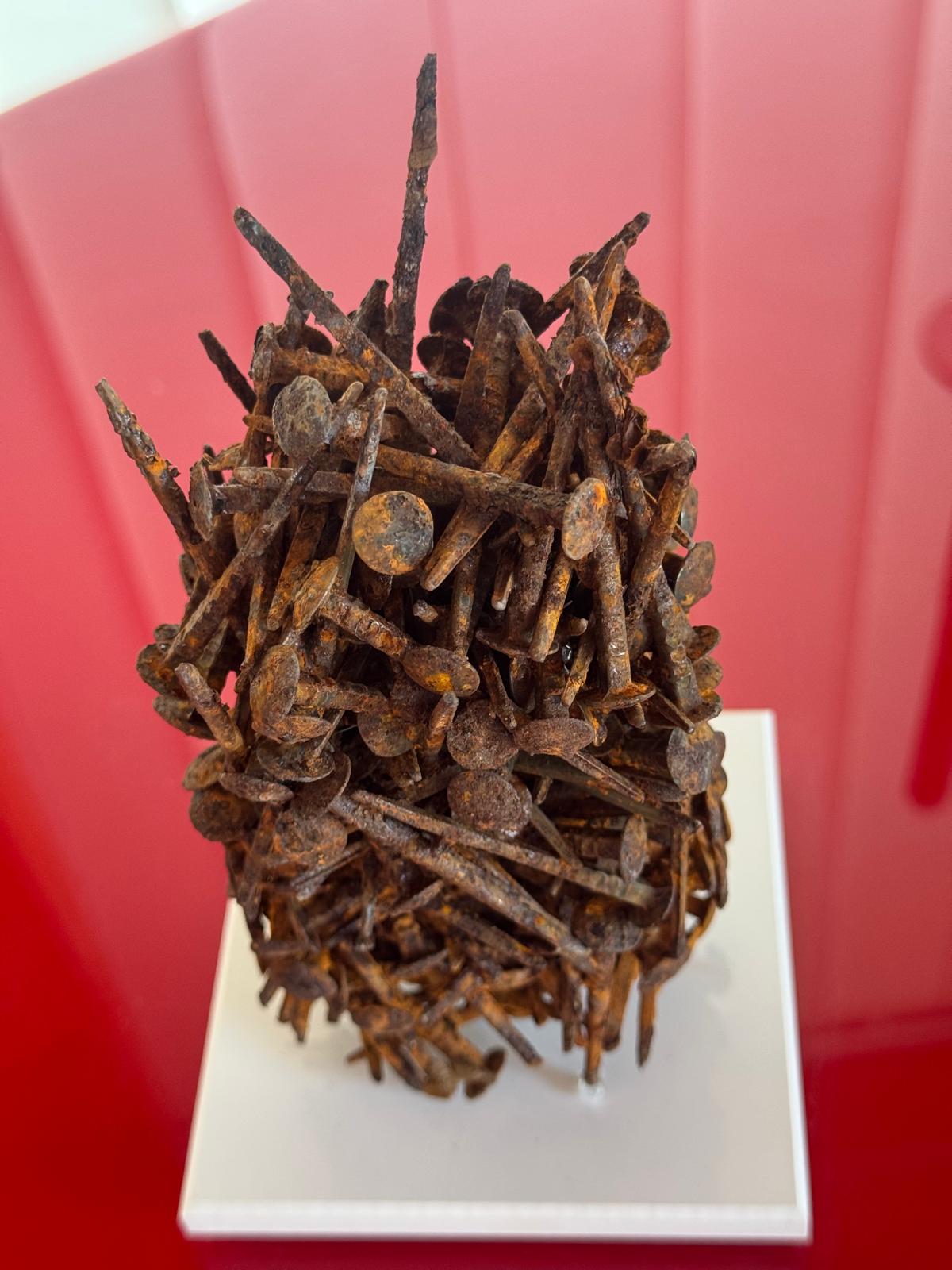
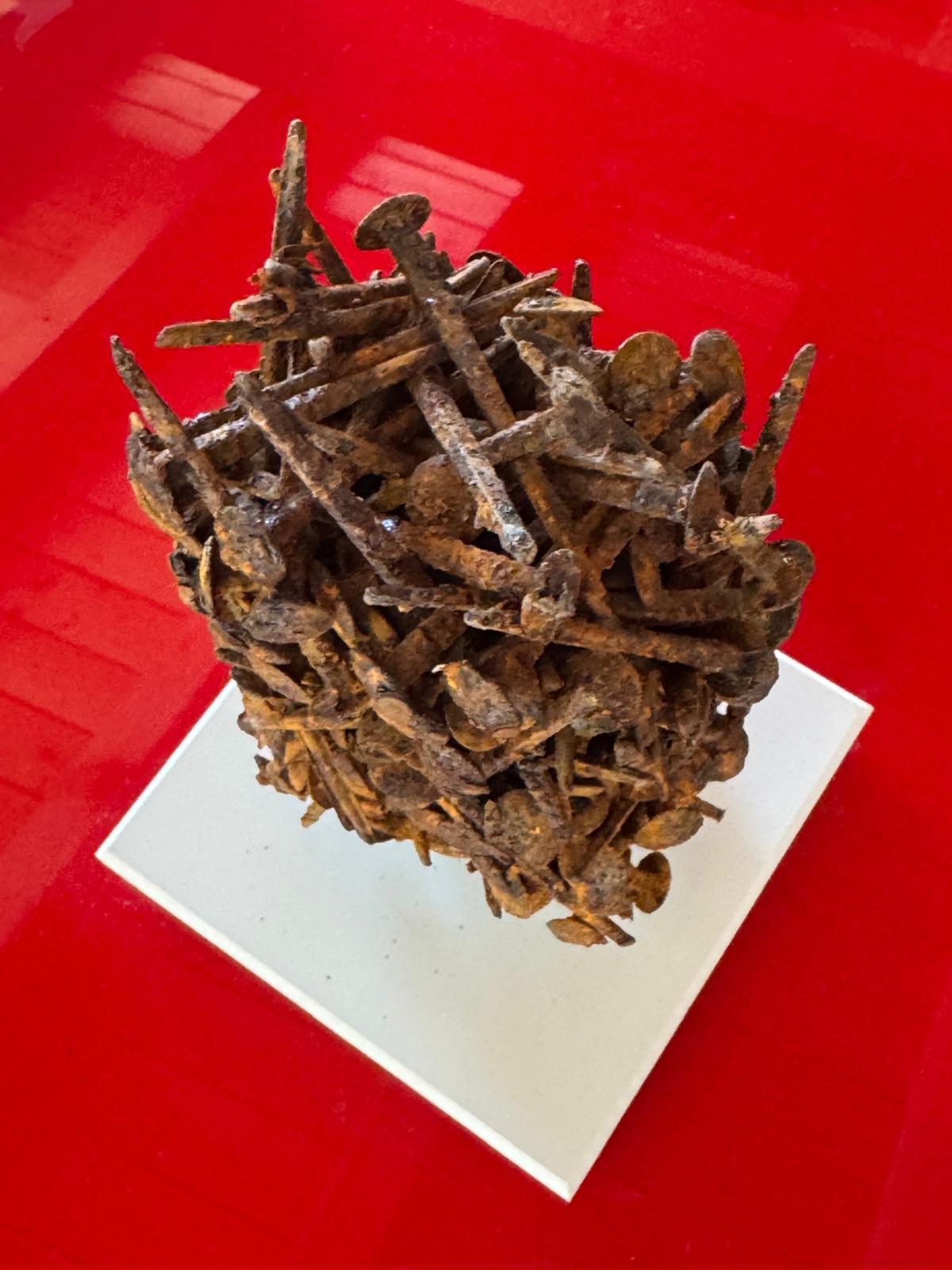
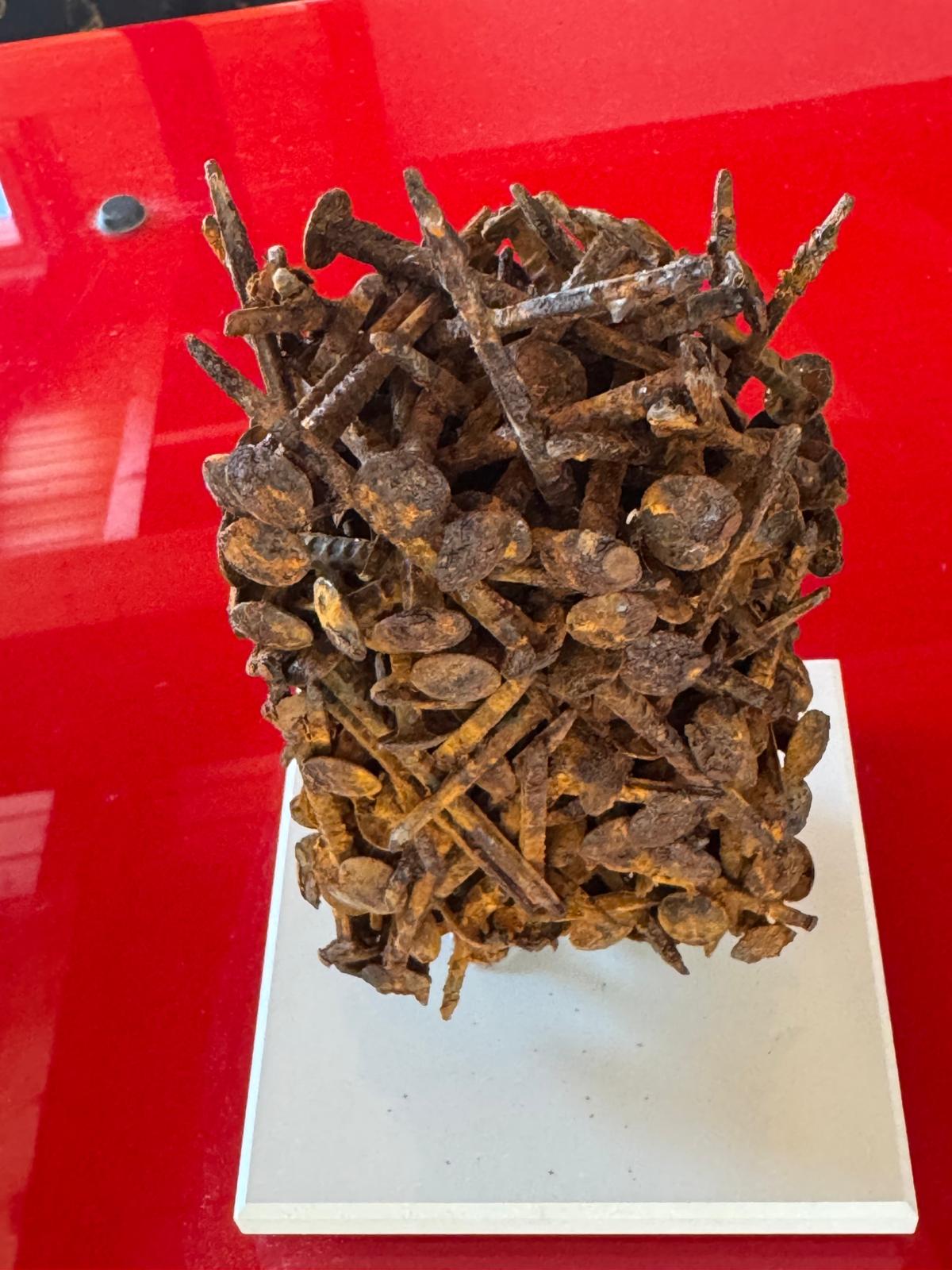
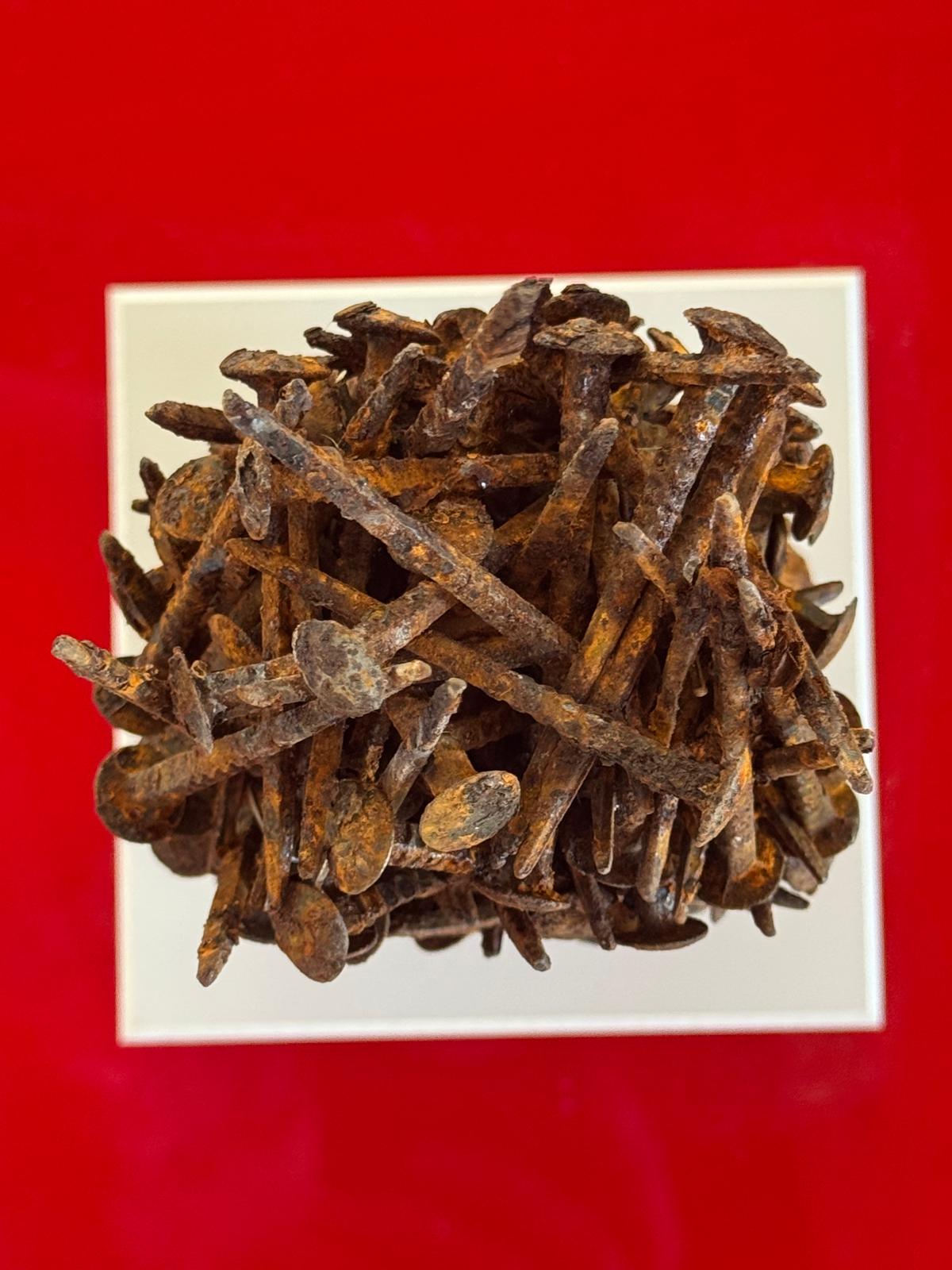
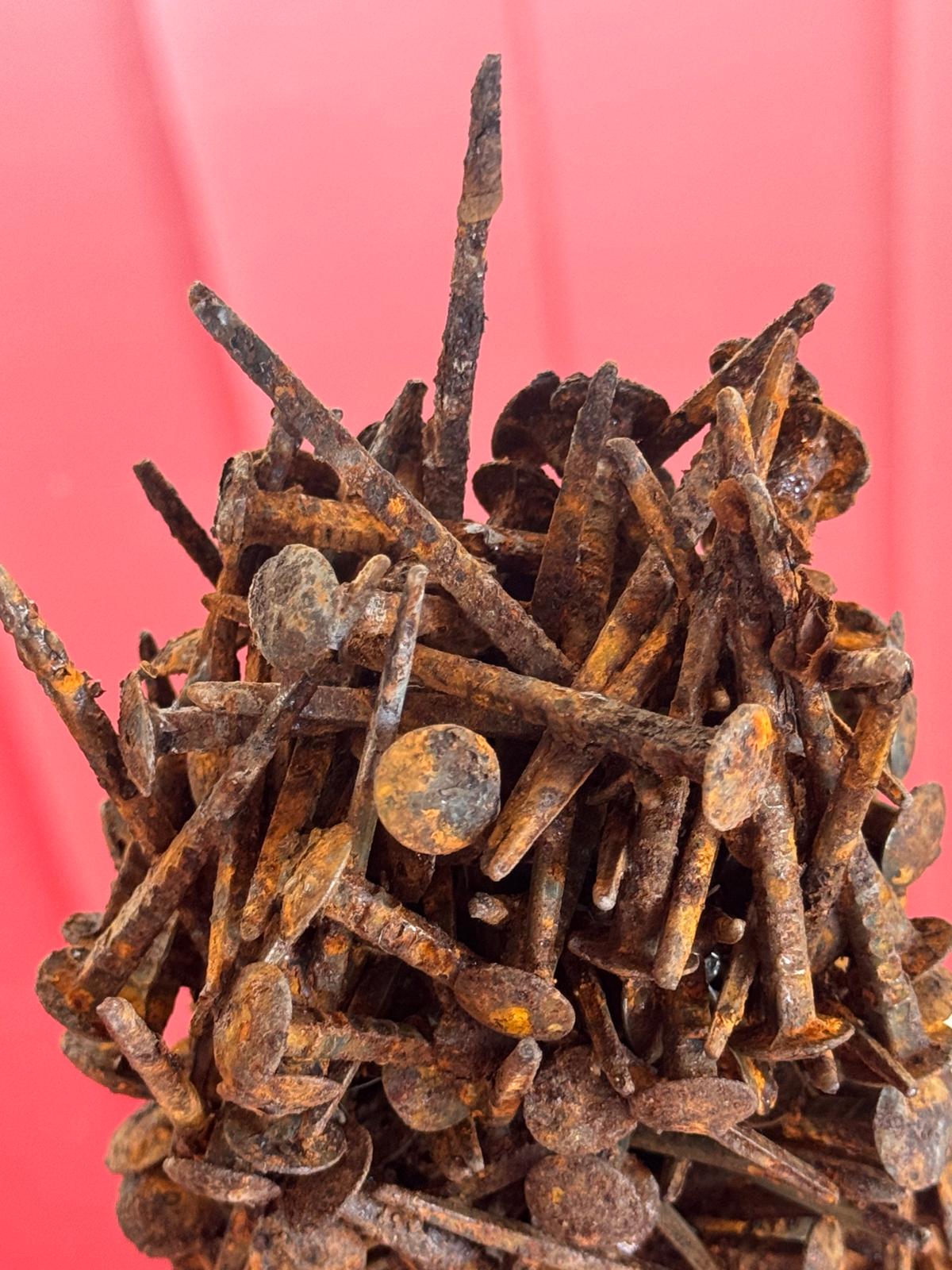
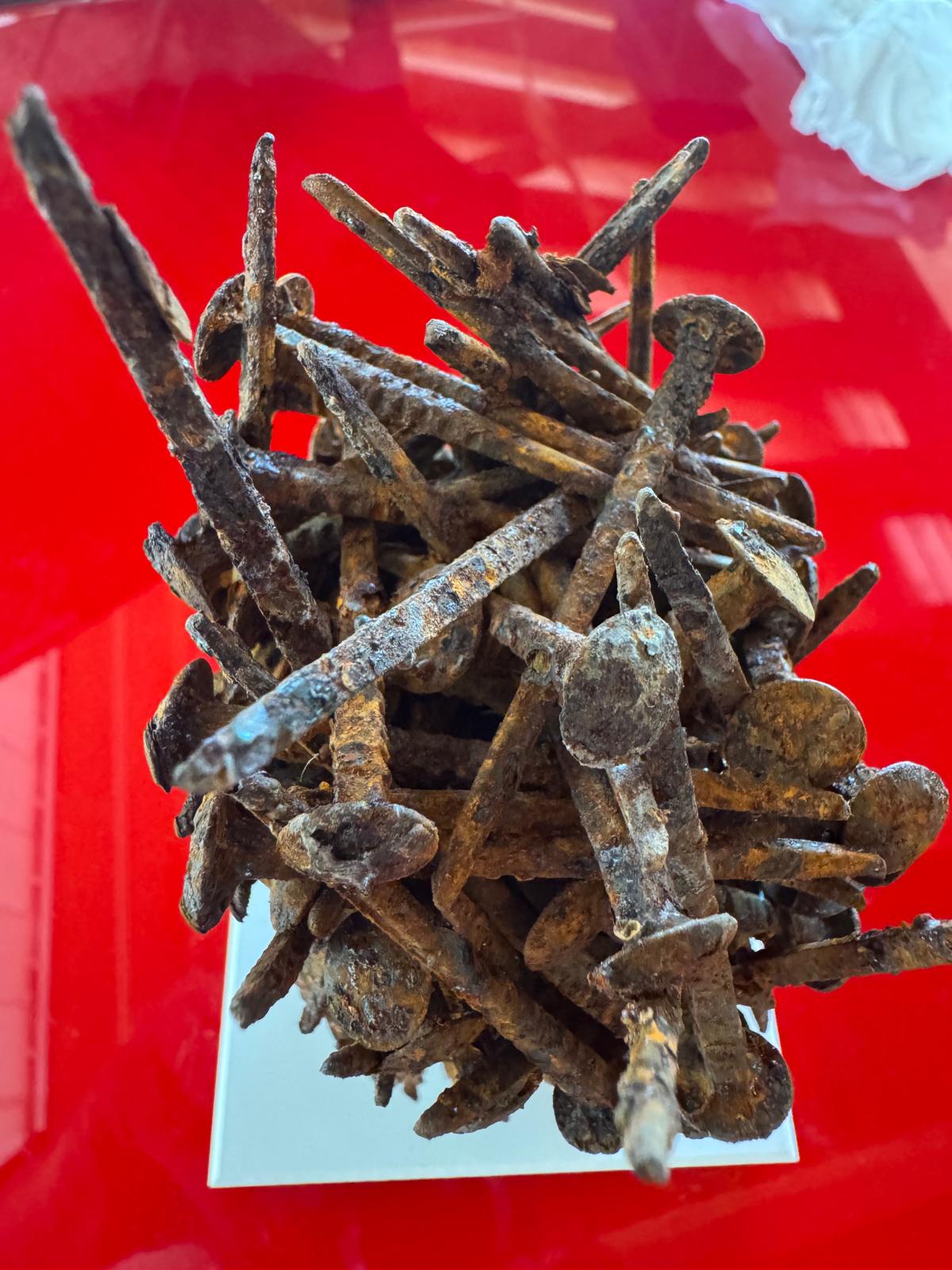
What Remains

A hundred salvaged rusted nails. Humble, anonymous, almost invisible. They were made not to shine, but to hold things together. Wood to wood. Structure to structure. One element to another. They stand for the silent builders, for those whose names are rarely remembered, and for the discreet bonds without which nothing endures. Civilisations are not held together only by monuments, ideas or institutions, but by countless invisible acts of connection. What remains is often what once held everything together.

First shown · 5 March 2026 · Campus Santé la Tour B3 cornerstone, Geneva

Read

Cry #2 · Presented at EPHJ

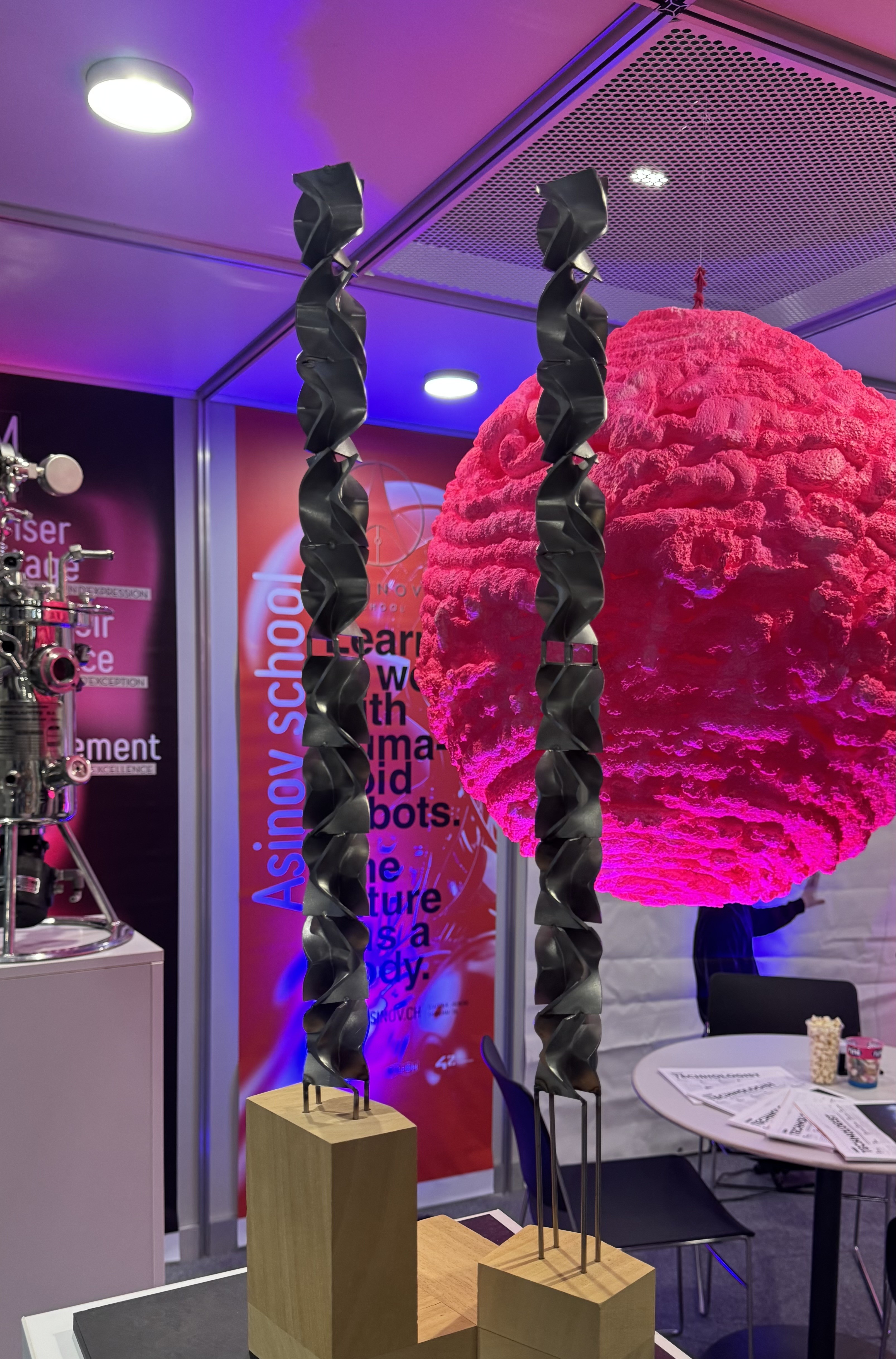
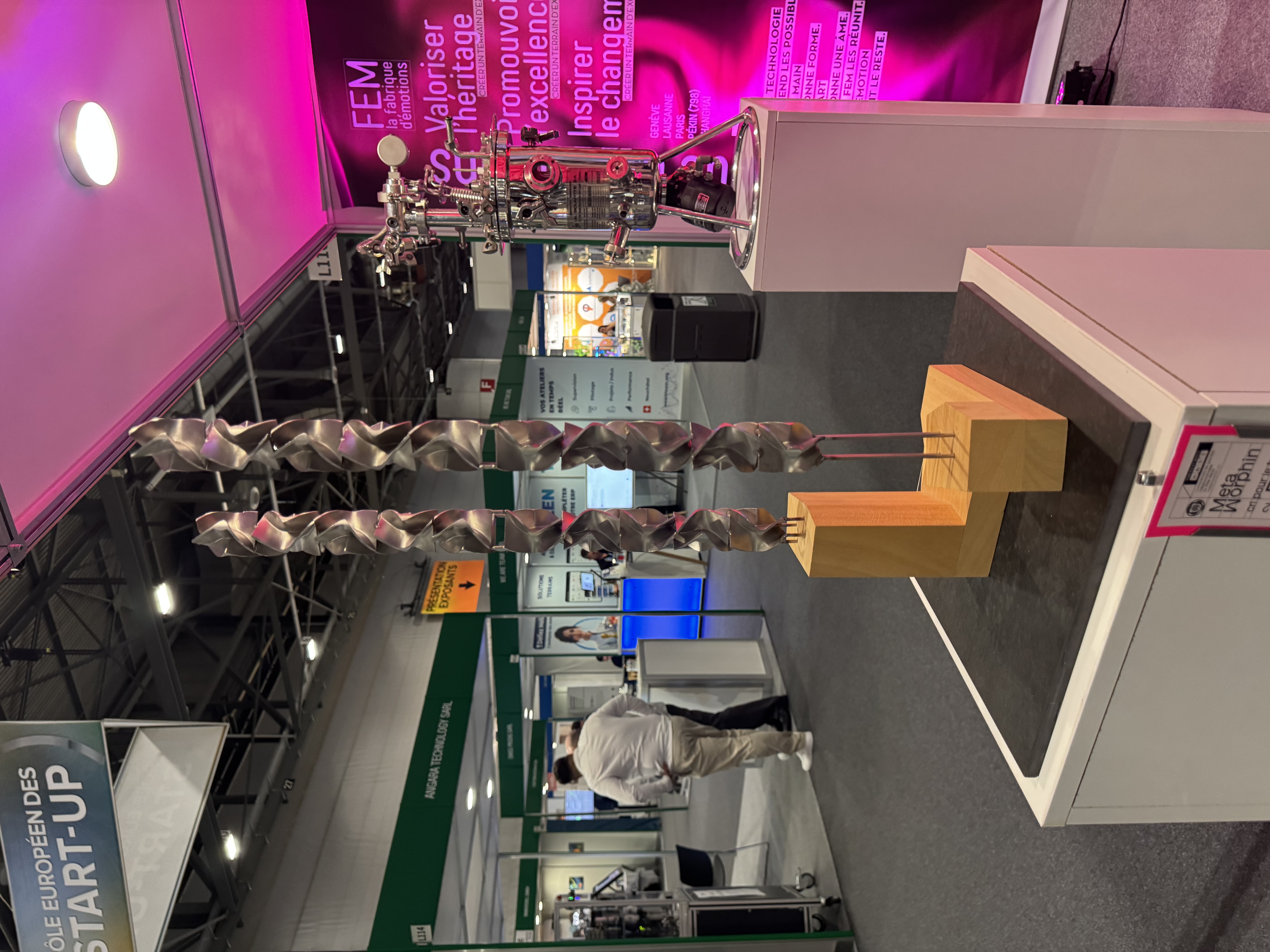
The Breath of Life

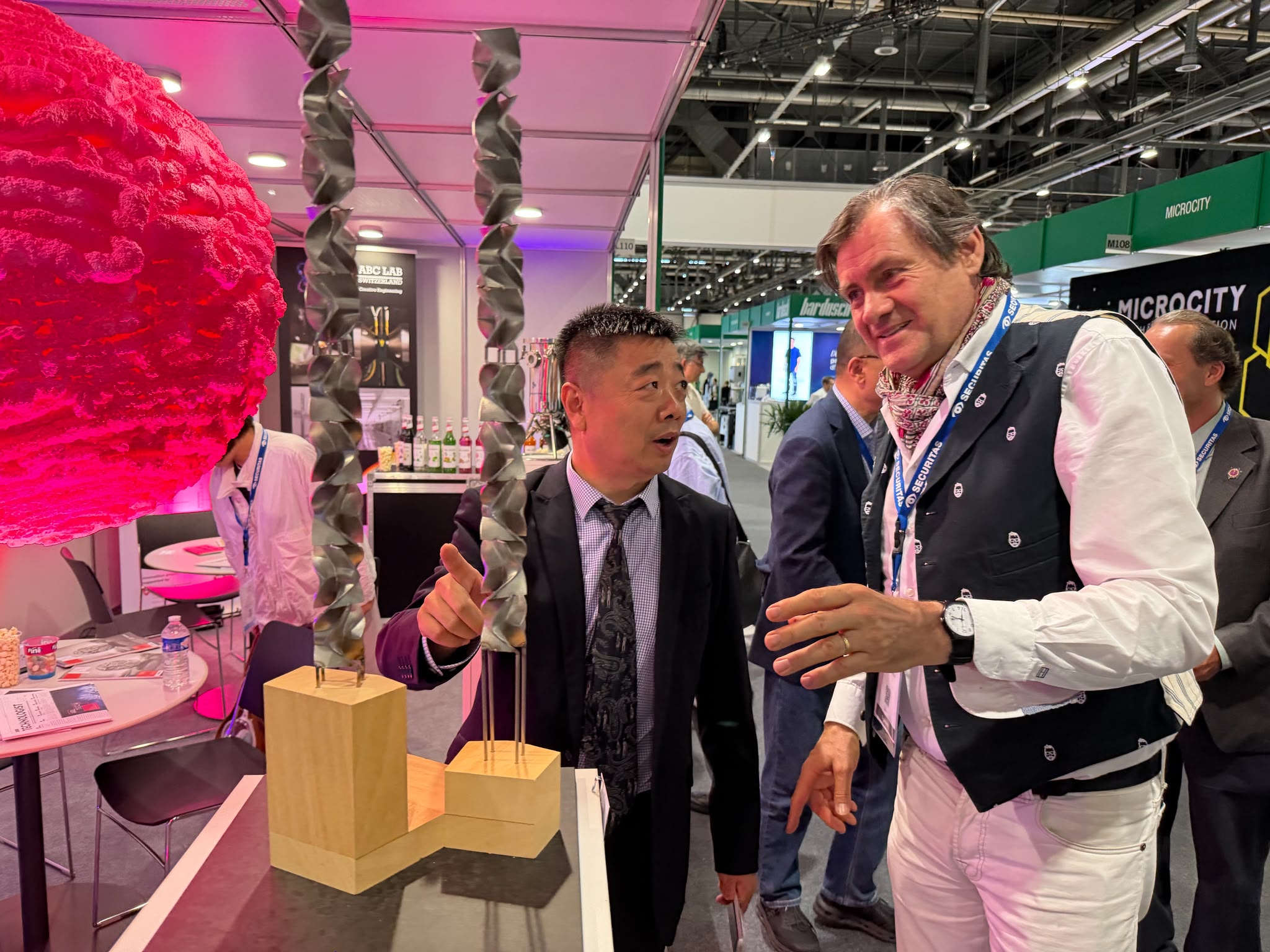
A reclaimed industrial column whose geometry evokes the double helix of DNA. Matter becomes code, structure becomes memory, metal begins to resemble life. The work explores the fragile frontier between what can be measured and what can only be experienced, between information and existence, between the architecture of the living and the mystery that animates it. We can describe life, map it, sequence it — but can we ever fully explain what makes it alive?

First shown · 16 June 2026 · EPHJ, Geneva

Read

Cry #3

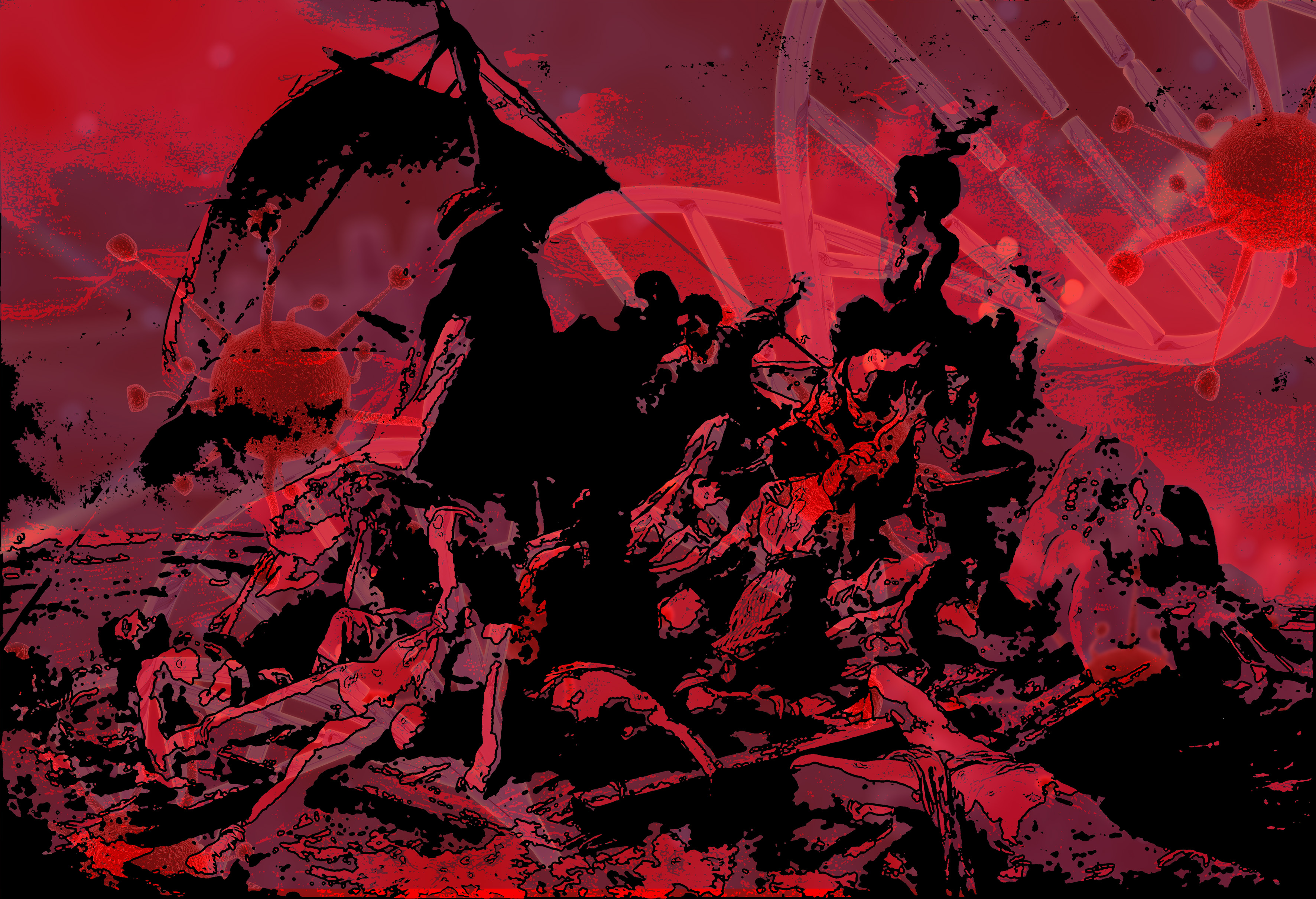
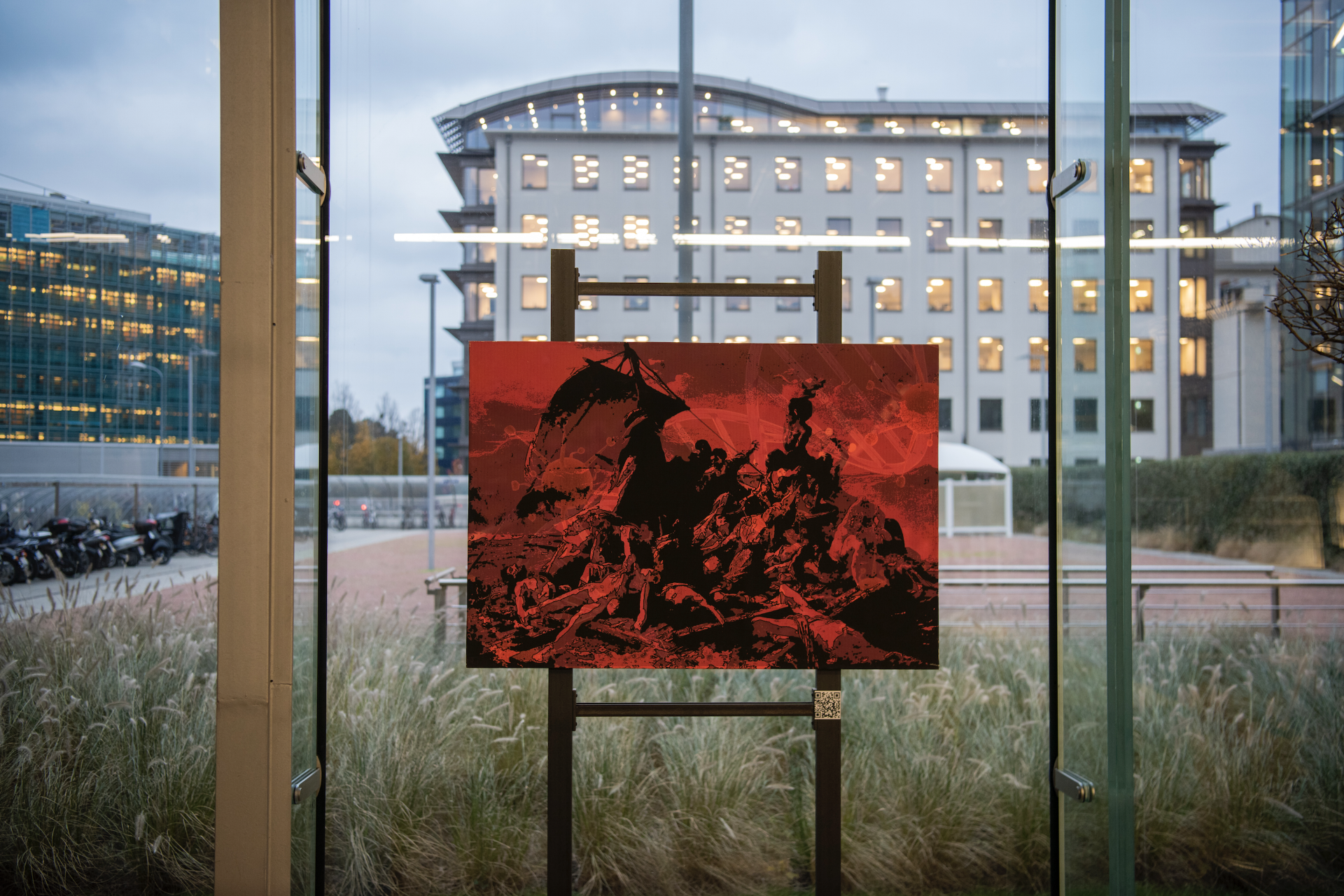
The Raft of the Medusa

The pandemic reminded us of a truth we had forgotten: we are all on the same raft. When the world stopped, our certainties collapsed and our vulnerability became visible again. Some were protected, others exposed; some were saved, others left behind. Like The Raft of the Medusa, this is not only a story about survival. It asks a more disturbing question: what do we become when solid ground disappears? In times of crisis, our humanity is measured by our ability not to let anyone fall from the raft.

First shown · 3 November, Paris

Read

Cry #4

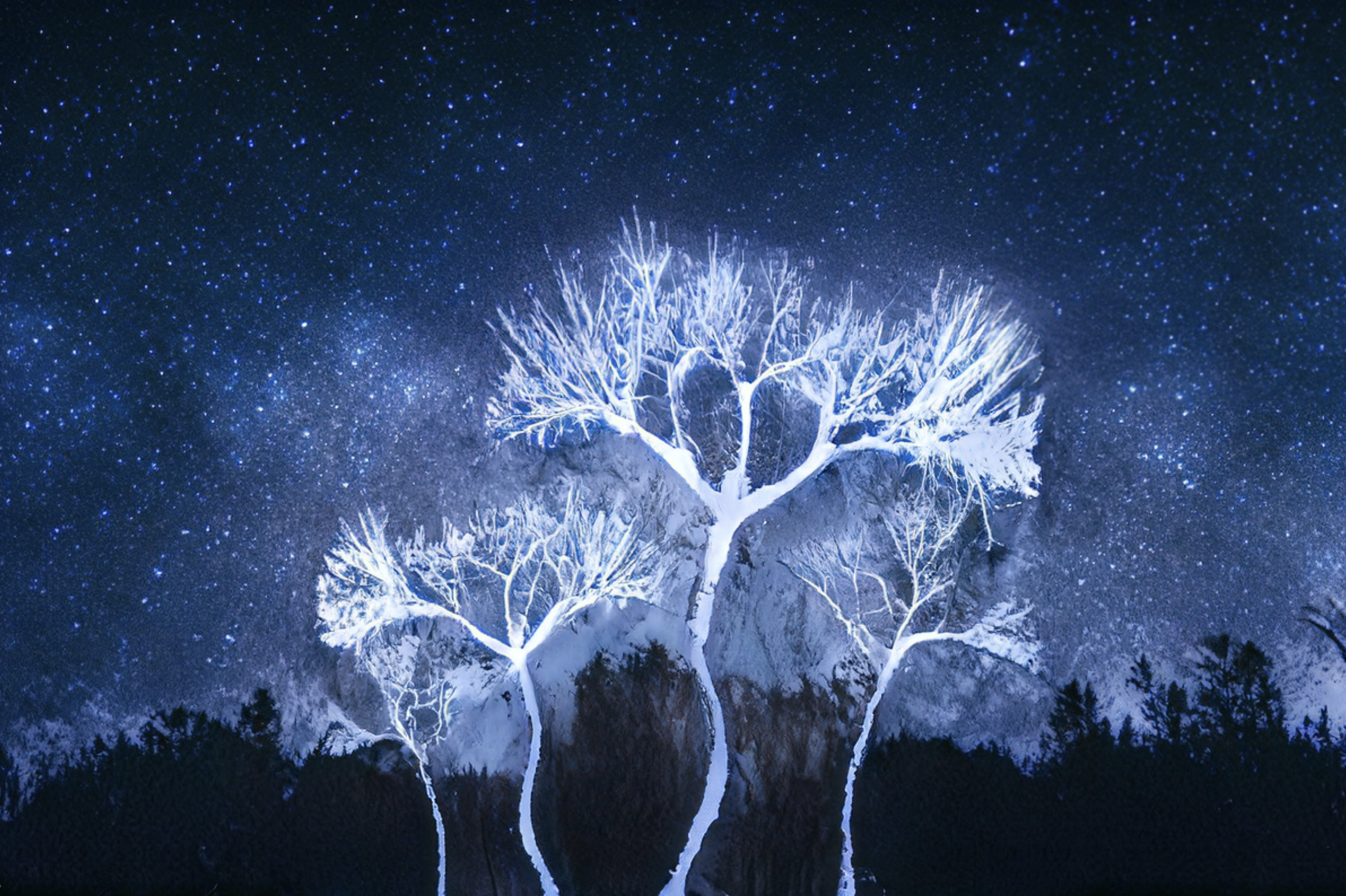
The Tree Within

Neurons unfold like the branches of a tree — roots, trunks, connections, an architecture repeated by nature at every scale. What grows underground resembles what grows within us. The work blurs the boundary between brain and forest, thought and life, intelligence and nature. Perhaps the forms through which we think are not so different from those through which the world itself grows. Are we observing nature — or is nature thinking through us?

First shown · 3 November 2021, Geneva

Read

The remaining Cries are not yet revealed. The future is still unfolding.

Les Cris · Manifesto

Twelve manifestos for the future.

We live in a paradoxical age.

Never has humanity held so much knowledge, so much technology, so much capacity to act — we can map the brain, read the genome, measure the living world, connect the planet, build an intelligence that learns. And yet, as the answers multiply, the essential questions sometimes seem to disappear.

What do we want to preserve?
What are we ready to transform?
What responsibilities come with our new power?
And what future are we really building?

The CRIES are neither traditional artworks, nor technological demonstrations, nor ideological positions.

They are triggers for thought. Alarms. Invitations to dialogue.

Each Cry takes a tension of our time and turns an object, a material, a trace of the real into a symbol — and asks us to look again at what seemed familiar.

None of these works offers an answer. That is deliberate.

Some questions are too important to ignore. And some answers too complex to be immediate.